Within a few decades rising temperatures and changing weather patterns drive the spread of these climate-sensitive infectious diseases globally, often to regions that have not seen them in the past.
There will be a growing number of suitable environments for the Aedes mosquito — which transmits dengue, Zika, chikungunya, yellow fever, and other viruses — and it’s predicted that 1 billion people will be newly at risk of these diseases by the year 2080. As it stands, health systems worldwide are unprepared for this shift.
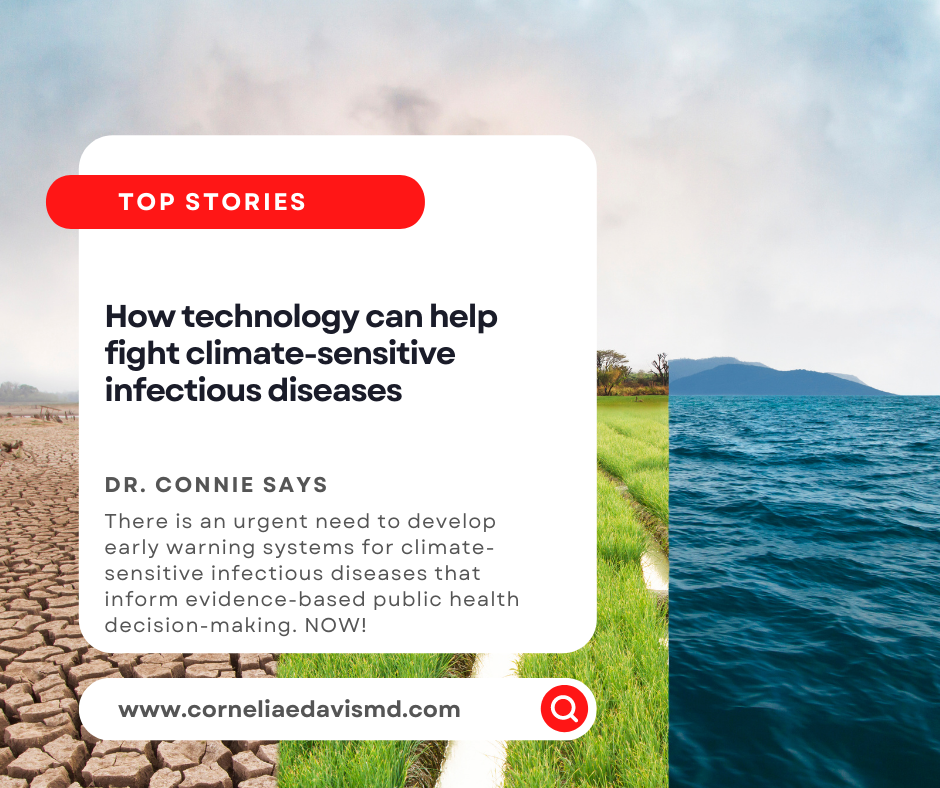
Dr, Connie Says: There is an urgent need to develop early warning systems for climate-sensitive infectious diseases that inform evidence-based public health decision-making. NOW!